

Major cruise operators have shifted from buying delivered sanitizers to generating hypochlorous acid (HOCl) onboard, and the documented record is what makes the case. CDC outbreak tables, a 1990–2020 systematic review in Eurosurveillance, and operator experience all point the same direction. HOCl is fast-acting against norovirus on hard surfaces, but the evidence base has real gaps. This article separates what is documented from what vendors claim.
Table of Contents
- Why do norovirus outbreaks keep happening on cruise ships?
- What does the CDC's 2026 cruise ship outbreak list actually show?
- How does hypochlorous acid kill norovirus on a ship?
- Which cruise lines have adopted HOCl, and what changed?
- What hygiene measures does the research say actually prevent outbreaks?
- What are the hidden costs of delivered sanitizers versus onsite generation?
- What should an operator verify before switching to HOCl?
- Key Takeaways
- References
Why do norovirus outbreaks keep happening on cruise ships?
Norovirus outbreaks persist on cruise ships because the virus resists alcohol-based hand sanitizers and survives on hard surfaces for weeks. According to EcoloxTech, as few as 10 to 100 viral particles are enough to infect a person.
The CDC posts a cruise ship outbreak when 3 percent or more of passengers or crew report gastrointestinal illness to the ship's medical staff. The CDC's acute gastroenteritis case definition includes three or more loose stools within a 24-hour period, or vomiting plus diarrhea, muscle ache, headache, abdominal cramp, or fever.

Norovirus is often the cause of gastrointestinal illness on cruise ships, but the causative agent is not always known when an investigation begins. The CDC's 2026 outbreak table includes E. coli on the Insignia and Seven Seas Mariner, and two National Geographic Sea Bird sailings with unknown agents.
The Mouchtouri et al. review, published in Eurosurveillance in 2024, examined norovirus outbreak prevention and control on cruise ships from 1990 to 2020. The review calls for traveler behavior-change strategies alongside hygiene measures implemented by crew members.
What does the CDC’s 2026 cruise ship outbreak list actually show?
The CDC's 2026 outbreak table lists five entries by name and sailing date. According to the CDC, the Ruby Princess (Princess Cruises, sailing June 12 to July 2, 2026) had norovirus as the causative agent. The Insignia (Oceania Cruises, April 7 to April 14, 2026) and Seven Seas Mariner (Regent Seven Seas, January 11 to February 1, 2026) both list E. coli.
Two National Geographic Sea Bird sailings in July 2026 appear with unknown causative agents. The CDC table does not provide passenger and crew case counts or attack rates for these sailings, and the Sea Bird agent remains unresolved.
The broader trend context matters. According to Dew Products, the CDC recorded 519 norovirus outbreaks between August 2023 and January 2024, a sharp increase over the prior year. That figure covers outbreaks generally, not only cruise ships.
How does hypochlorous acid kill norovirus on a ship?
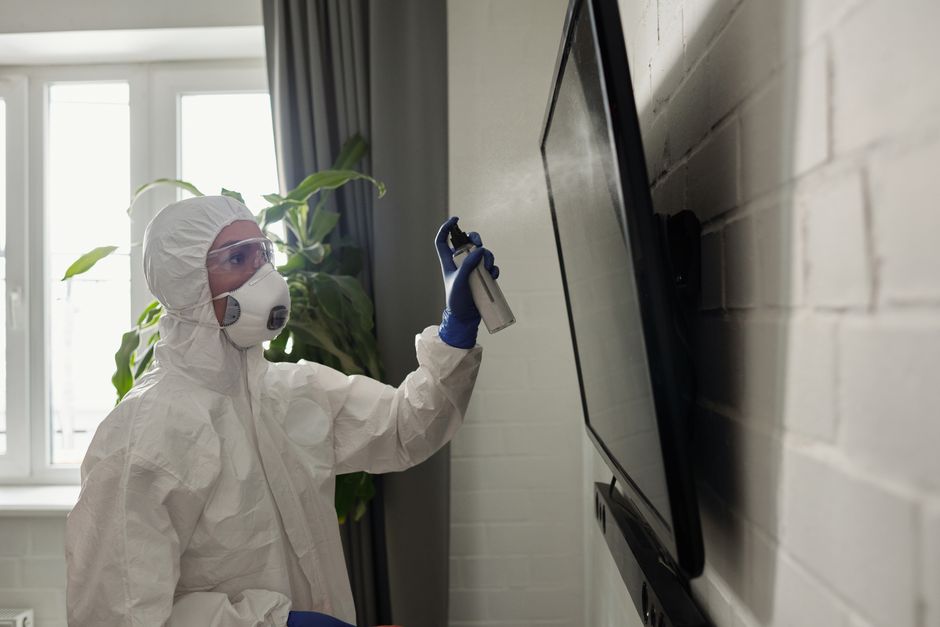
Hypochlorous acid is described as killing faster than most quaternary ammonium compounds or bleaches, often in under 60 seconds at 100 to 200 ppm, according to EcoloxTech. The mechanism is oxidative: HOCl disrupts the viral envelope and denatures proteins on contact.
Quats are less effective against certain viruses, including norovirus, and leave residues that require a rinse step. Dew Products notes that the rinse step is a real labor cost on a vessel where crew time is already stretched.
Regulatory status is separate from chemistry. EcoloxTech states that its generators are EPA-regulated devices, not registered disinfectants. The only EcoloxTech product with disinfection claims is HOCl-AS200, which carries EPA Reg. No. 101112-1.
The evidence gap is real. Independent peer-reviewed data quantifying HOCl efficacy against norovirus specifically on cruise ships is thin outside vendor sources. Operators should treat vendor efficacy claims as directional until independent data confirms them.
Which cruise lines have adopted HOCl, and what changed?
Norwegian Cruise Line was described as one of the first major operators to adopt HOCl technology across its fleet, using EcoloxTech HOCl generators, according to EcoloxTech. Dew Products states that Norwegian Cruise Lines implemented HOCl during the pandemic and has not reported a single outbreak since. That claim comes from a vendor source and is not independently verified.
The operational shift is what matters to a facilities director. Onboard generation replaces pallets of delivered chemicals, a chemical storage room, a hazardous-materials program, and a freight bill that has risen every year.
The EcoloxTech 1200 is the scale where that arithmetic changes. At 1,200 liters per hour, the system feeds a distribution loop rather than a single tap. Wash lines, CIP circuits, fogging networks, footbaths, and hose stations draw from a common supply at the concentration each application requires.
The EcoloxTech 300 is the wall-mounted entry point, producing continuously at an adjustable 20 to 225 ppm. EcoloxTech's own estimate puts the savings from one shipwide HOCl system at $10,000 to $40,000 per month.
What hygiene measures does the research say actually prevent outbreaks?
The Mouchtouri et al. review states that foodborne and waterborne outbreaks can be prevented through hygiene measures implemented by crew members on board. The review covers norovirus outbreak prevention and control on cruise ships from 1990 to 2020.
Traveler behavior change is part of the reviewed recommendations. Hand hygiene, reporting illness early, and isolation compliance all appear in the review's scope.
The research pack does not give effect sizes for individual measures. Operators should not invent rankings among hand hygiene, surface disinfection, and isolation protocols. What the review supports is that crew-implemented measures work as a system, not as isolated interventions.
What are the hidden costs of delivered sanitizers versus onsite generation?
Delivered sanitizers carry line items that never appear on the invoice. Freight, hazmat storage, PPE, corrosion control, and fuel surcharges all add cost before a single gallon is used. EcoloxTech names these hidden costs directly.
Quats add a rinse step that delivered chemistry does not eliminate. Dew Products notes that quat residues require rinsing, which means labor, water, and time on a vessel where all three are constrained.
Onsite generation replaces that arrangement with a skid, a salt supply, and a water connection. The machine is set to the concentration the SOP calls for, so nobody has to remember a dilution ratio.
The ROI framing should stay concrete: dollars per gallon, payback in months. EcoloxTech's own estimate of $10,000 to $40,000 per month saved per shipwide system is a vendor figure and should be modeled against actual chemical spend before adoption.
What should an operator verify before switching to HOCl?
Confirm regulatory status first. Generated HOCl solution is not a registered disinfectant. Where a hospital protocol, insurer, or state inspector specifies an EPA-registered product, HOCl-AS200 (EPA Reg. No. 101112-1) is the compliant answer.
Ask for independent efficacy data against the target pathogen, not vendor blogs. The research pack's own gaps list flags that peer-reviewed data on HOCl against norovirus specifically on cruise ships is thin.
Check whether CDC inspection scores show measurable change for ships that adopted HOCl compared with those that did not. The research pack does not answer this, so it remains an open question.
Verify feedwater, power, and drain requirements fit existing SOPs without a chemistry change. The CDC outbreak table shows that sanitation failures still occur, which means the system must integrate with crew routines, not replace them.
Key Takeaways
- Norovirus can infect with as few as 10 to 100 viral particles and survives on hard surfaces for weeks, which is why alcohol sanitizers are not enough.
- CDC posts a cruise outbreak when 3 percent or more of passengers or crew report GI illness to the ship's medical staff.
- CDC's 2026 table lists norovirus on Ruby Princess, E. coli on Insignia and Seven Seas Mariner, and two unknown-agent National Geographic Sea Bird sailings.
- HOCl is described as killing in under 60 seconds at 100 to 200 ppm, faster than most quats or bleaches.
- EcoloxTech generators are EPA-regulated devices, not registered disinfectants; HOCl-AS200 (EPA Reg. No. 101112-1) is the only EcoloxTech product with disinfection claims.
- Norwegian Cruise Line was described as an early fleet-wide HOCl adopter using EcoloxTech generators; the "no outbreaks since" claim comes from a vendor source and is not independently verified.
- The Mouchtouri et al. review (1990–2020) concludes crew-implemented hygiene measures can prevent foodborne and waterborne outbreaks, but effect sizes are not quantified.
References
- Why Major Cruise Lines Are Using HOCl to Prevent Norovirus Outbreaks — EcoloxTech, date unknown
- Outbreaks on Cruise Ships in VSP's Jurisdiction — CDC, published 2024-05-15, updated 2026-07-23
- Systematic literature review and meta-analysis on preventing and controlling norovirus outbreaks on cruise ships, 1990 to 2020 — Eurosurveillance, published 2024-03-07
- Enhancing Food Safety: Why HOCl Outshines Quats In The Food Service Industry — Dew Products, date unknown
Written by the EcoloxTech engineering team. If you want this applied to your own facility, the free sanitation audit sizes the system and models the payback in writing, at no charge.